Narcotics Detectives Contacted You About Drug Sales. Here’s What I’d Want You to Know.
Estimated Read Time: 3 Minutes
Reviewed by Attorney Nate Gjesdal
October 2, 2026
If you have been contacted by narcotics investigators regarding drug sales or possession for sales, there are a lot of things you need to be aware of.
These cases move quickly.
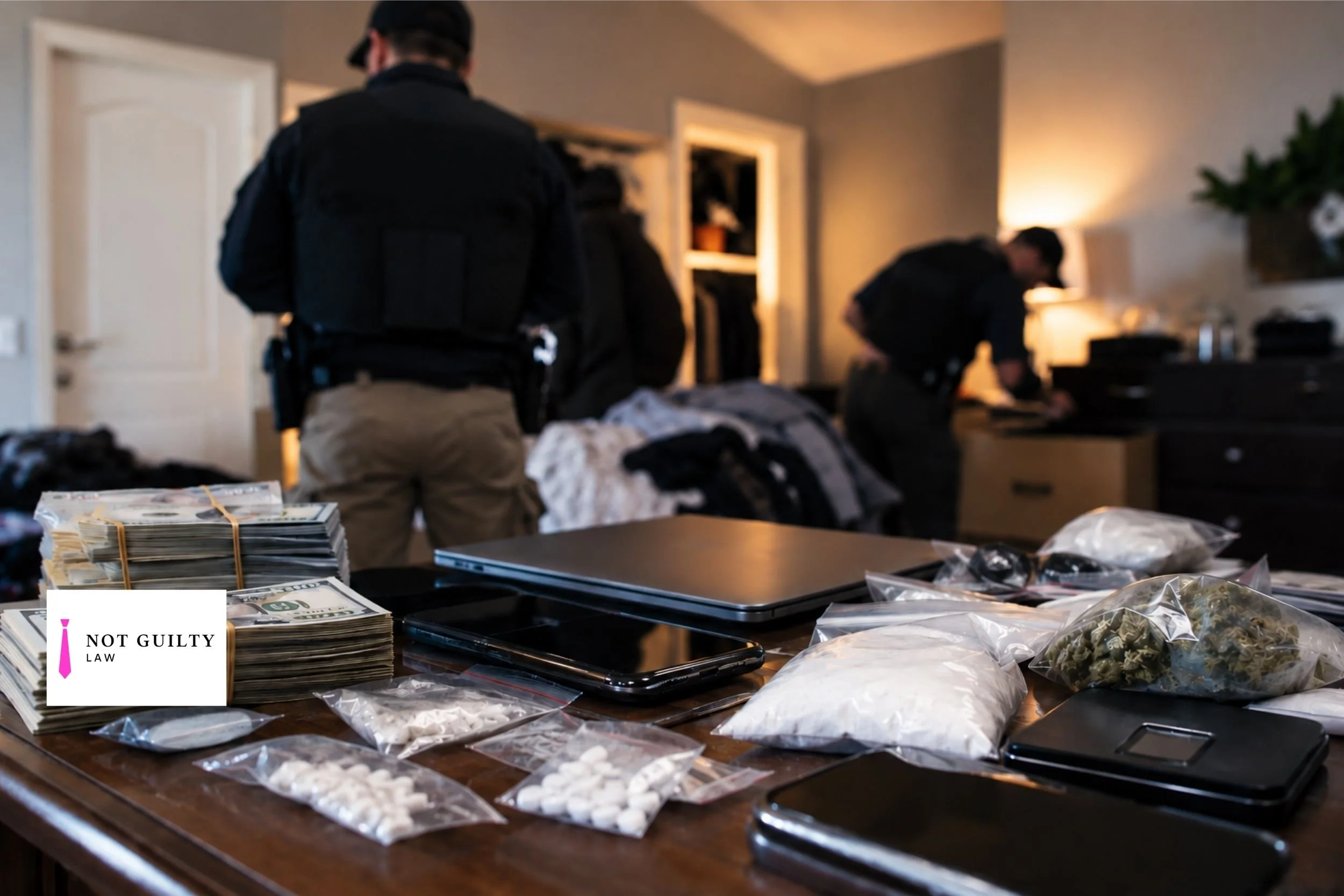
You may have already been detained. Police may have searched your home, car, storage unit, or other property. They may have seized your phone, laptop, cash, or other belongings.
And even if they let you go, that does not necessarily mean the investigation is over.
Here are some of the things I would want you to know immediately.
If Police Seize Your Property, Demand a Receipt
If narcotics investigators execute a search warrant and seize any of your property, including phones, laptops, cash, or other items, demand a receipt for the property on the spot.
Keep it.
That receipt can become important later when you and your attorney are trying to determine exactly what was seized and recover property that should be returned.
When police are searching your home or taking your belongings, getting a receipt probably isn't the first thing on your mind. But it's a small step that can save you a lot of trouble later.
If You're Detained and Let Go, the Investigation May Still Be ONGoing
Being allowed to leave does not necessarily mean you're in the clear.
Narcotics detectives may continue investigating after you've been detained and released. Depending on the circumstances and the legal authority they obtain, investigators may seek location information associated with your cell phone, obtain phone records or text messages, or conduct surveillance to see who you're talking to and where you're going.
Your phone can become a major part of a drug sales investigation. So can the people you communicate with and the places you visit.
Don't assume that because you weren't arrested that day, the case went away.
Do Not Go to the Police Station to Explain Yourself
If narcotics detectives want you to come to the police station to meet with them, do not go there on your own.
If they are calling or texting you about the investigation, don't start answering questions or trying to explain what happened.
Hire an attorney immediately who is familiar with drug sales investigations and let your attorney handle the communication.
I've seen people believe they can talk their way out of an investigation. The problem is that detectives may already have search warrants, surveillance, statements from other people, phone evidence, or other information you know nothing about.
You may think you're having a conversation.
They're building a case.
Investigators May Use Pressure to Get You to Talk
Narcotics detectives are experienced investigators, and they know how to apply pressure.
In some cases, that pressure may involve the people around you. Detectives may raise the possibility of investigating or prosecuting a spouse, family member, friend, or someone else connected to the case if they believe it will result in you making statements that help their investigation.
That can be extremely difficult to navigate in the moment, especially when someone you care about is being brought into the conversation.
This is another reason I want my clients to let me handle communications with investigators. You should not be making decisions about what to say while you're under that kind of pressure.
Finding Narcotics Doesn't End the Analysis
There are several ways we may be able to challenge a drug sales case.
We can challenge the search warrant.
A warrant doesn't automatically mean that everything police did was lawful. We can examine the basis for the warrant, how it was obtained, and how the search was conducted. Depending on the facts, we may be able to challenge the warrant and seek to exclude evidence.
We can challenge whether you actually possessed the narcotics.
Finding drugs somewhere does not necessarily establish who possessed them.
This can become particularly important when narcotics are found in a place that multiple people can access, such as a house, vehicle, storage unit, or shared space.
We can challenge whether the narcotics were actually possessed for sale.
Possession of narcotics and possession for sale are not the same thing.
Investigators may point to the quantity of drugs, cash, packaging, scales, text messages, or other evidence as proof that the narcotics were intended for sale rather than personal use.
That conclusion can be challenged too.
These Cases Move Quickly
Every case is different.
But if narcotics detectives are already contacting you, executing search warrants, seizing property, or asking you to come in and talk, I would not wait to see what happens next.
Hire an attorney who is familiar with drug sales investigations as soon as possible.
There may be search warrants to review, property to account for, electronic evidence being gathered, and important questions about whether the prosecution can actually prove possession or possession for sale.
Most importantly, you should not be navigating conversations with experienced narcotics investigators by yourself.
Let your attorney handle those communications while you focus on protecting yourself and moving forward.
Ask Us a Question
Have a question about your specific circumstances? Ask below and we will respond to you within 48 hours.