Estimated Read Time: 3 Minutes
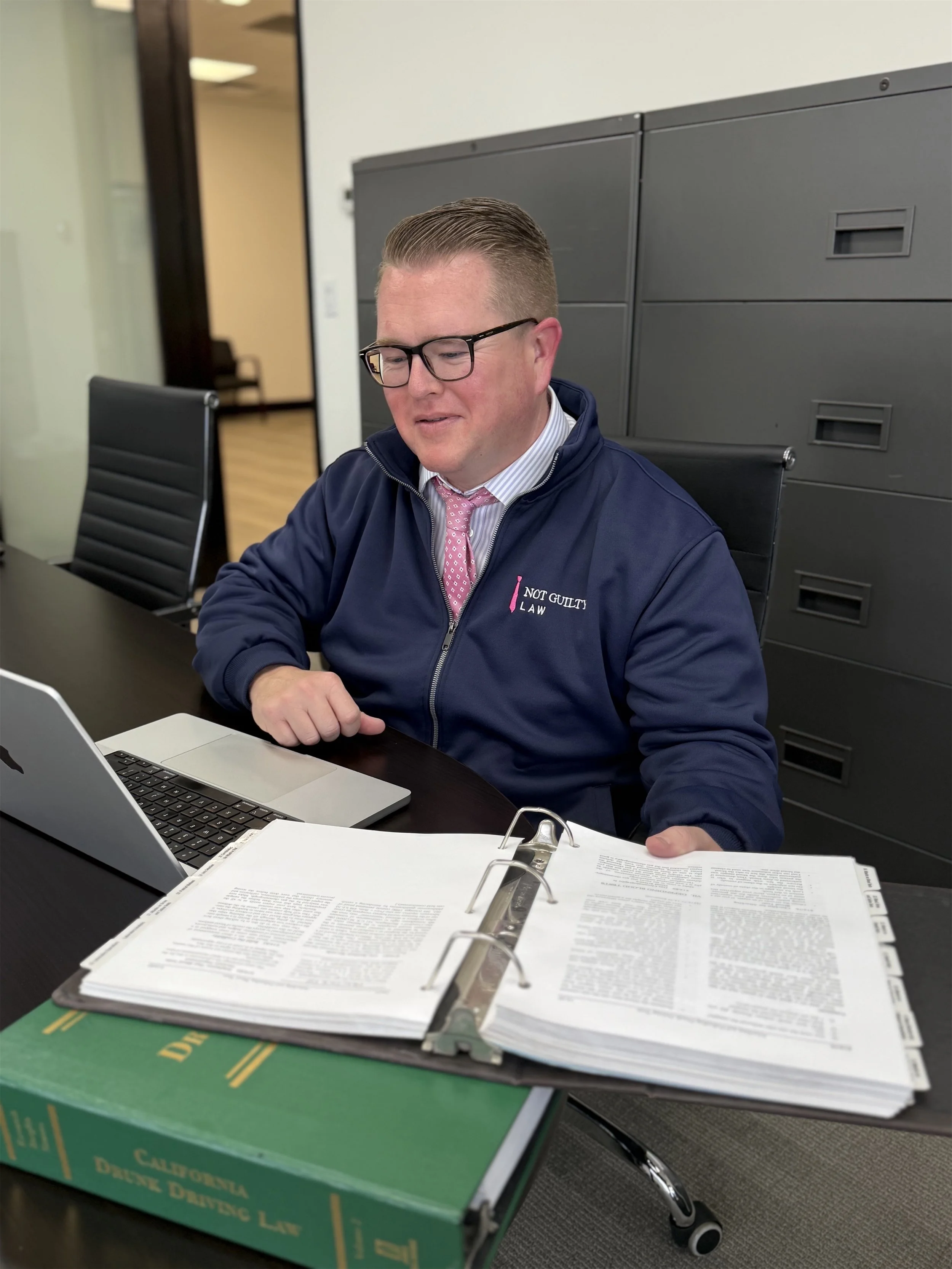
Reviewed by Attorney Nate Gjesdal
November 23, 2026
A third DUI in California could soon mean felony charges instead of a misdemeanor. For some repeat offenders, another DUI could mean a six-year driver's license suspension.
On September 25, 2026, Governor Gavin Newsom signed four new DUI bills into law. These changes could have serious consequences for drivers with prior DUI convictions, including jail time, loss of driving privileges, and a felony record.
Not all four laws take effect immediately. Here's what's changing, who will be affected, and what you should know if you're facing DUI charges in California.
1. AB 1546: A Third DUI Could Become a Felony
Under California law before AB 1546 takes effect, a third DUI within 10 years is generally prosecuted as a misdemeanor. A fourth DUI can already be charged as a felony.
Assembly Bill 1546 increases the penalties for repeat DUI offenders:
Third DUI within 10 years: Can be prosecuted as either a misdemeanor or felony, with a felony sentence of 16 months, two years, or three years.
Fourth DUI within 10 years: Can still be prosecuted as either a misdemeanor or felony.
Fifth DUI or more within 10 years: Must be prosecuted as a felony under the repeat-offender provision, with a sentence of up to three years.
These changes are expected to take effect January 1, 2027.
What this means for drivers
Someone with two prior DUI convictions who gets arrested for a third could face felony charges instead of a misdemeanor under the new law.
A felony conviction has profound consequences. A person who recently accepted a job offer could have that offer rescinded after a background check. A registered nurse could face an investigation by the California Board of Registered Nursing, leading to suspension or loss of their nursing license. A commercial truck driver could lose the driving privileges required for their job.
These examples demonstrate why the difference between a misdemeanor and felony conviction matters.
2. SB 907: Braun's Law Increases the Stakes for Repeat DUI Offenders
Senate Bill 907, also known as Braun's Law, was named in honor of Braun Levi, an 18-year-old who was killed by a suspected repeat drunk driver in Manhattan Beach in 2025.
One provision addresses cases where a DUI charge is reduced to a lesser offense, such as reckless driving involving alcohol, commonly called a wet reckless.
Under the new law, judges must give certain defendants a formal warning, known as a Watson advisement, explaining that impaired driving can kill someone and that a future fatal incident may result in murder charges.
The law also increases certain penalties for drivers who commit hit-and-run offenses after previous qualifying convictions.
What this means for drivers
Someone arrested for DUI might negotiate a reduced charge of wet reckless, pay a fine, complete the required classes, and move on.
Years later, if they're involved in another impaired-driving incident that results in someone's death, prosecutors may use their prior Watson advisement as evidence that they knew impaired driving could kill someone.
The driver could face second-degree murder charges, which can carry a sentence of 15 years to life in prison.
3. AB 1685: More DMV Points for Certain DUI-Related Fatalities
Assembly Bill 1685 increases the DMV violation points for gross vehicular manslaughter while intoxicated from two points to three.
California's DMV tracks driving violations using a point system. For most adult drivers, accumulating four points in 12 months, six points in 24 months, or eight points in 36 months can trigger DMV action against their license.
The new three-point rule takes effect January 1, 2031.
What this means for drivers
Someone who already has one point on their driving record from speeding would receive three additional points for a conviction covered by AB 1685, bringing the total to four.
That can trigger additional DMV action, although serious DUI-related convictions also carry separate license revocation requirements.
For someone who drives to work every day, losing driving privileges can mean paying for rideshares, arranging transportation, or leaving a job that requires driving.
4. AB 1687: A Six-Year License Suspension for Certain Repeat DUI Offenders
Assembly Bill 1687, also known as Irene's Law, creates a six-year driver's license suspension for certain drivers convicted of an alcohol-related DUI causing bodily injury after four or more qualifying prior DUI convictions within 10 years.
The law takes effect January 1, 2031.
Eligible drivers may apply for restricted driving privileges after serving the first 12 months, subject to requirements that include an approved DUI program and an ignition interlock device, which requires a breath sample before starting the vehicle.
What this means for drivers
A contractor who drives between construction sites every day could lose the ability to visit job sites or transport equipment. A parent responsible for school drop-offs, childcare pickups, and family appointments would need to arrange other transportation.
Even if the driver qualifies for a restricted license after 12 months, they must satisfy DMV requirements and pay the associated costs.
Facing a DUI in Orange County? Act Early.
Attorney Nate Gjesdal brings over 15 years of criminal defense experience to building effective defense strategies. He examines whether the traffic stop was lawful, whether breath or blood tests were reliable, and whether prior convictions qualify for increased penalties.
When the evidence is strong, Nate may recommend a different approach, such as preparing a mitigation package documenting alcohol treatment, rehabilitation, and employment responsibilities to negotiate reduced charges. He explains his recommendations and why he believes they're the best course of action.
In most DUI arrests involving a DMV administrative suspension, you have just 10 days to request a DMV hearing. Contact Not Guilty Law to discuss your case directly with Nate.
This article is for general information only and is not legal advice. The laws have different effective dates and may not apply to every case.
Ask Us a Question
Have a question about your specific circumstances? Ask below and we will respond to you within 48 hours.